


Good digestion, stronger immunity, more energy, and better overall well-being — your gut has a say in all of it. And while that might sound like a cliché, research continues to confirm that the state of your gut microbiota affects the health of your entire body — from blood sugar levels and body weight to brain function.
In today’s post, we’ll take a closer look at three key terms: prebiotics, probiotics, and synbiotics. What’s the difference between them, where can you find them, and how can you easily add them to your daily diet?
Prebiotics, Probiotics, Synbiotics — What Do They Actually Do?
Let’s start with the basics:
- Probiotics are beneficial live bacteria that, when consumed in adequate amounts, support your health. The most well-studied strains belong to the Lactobacillus and Bifidobacterium genera.
- Prebiotics are their “food” — mainly specific types of fiber and certain carbohydrates (such as inulin or galactooligosaccharides) that aren’t digested in the small intestine but are fermented in the colon, where they nourish beneficial bacteria. Some polyphenols – natural antioxidants found in plant foods – may also have prebiotic-like properties and support gut microbiota, although they are not always classified as traditional prebiotics.
- Synbiotics are combinations of probiotics and prebiotics in one product, designed to work together and enhance their beneficial effects.
This trio is especially valuable when you want to improve digestion, support your immune system, or manage conditions like insulin resistance and type 2 diabetes.
Where to Find Them?
You don’t need expensive supplements to support your gut — many natural foods provide exactly what you need.
Natural Probiotics:
- Fermented vegetables – like sauerkraut, pickles, kimchi, beet kvass
- Fermented drinks – kombucha, water kefir
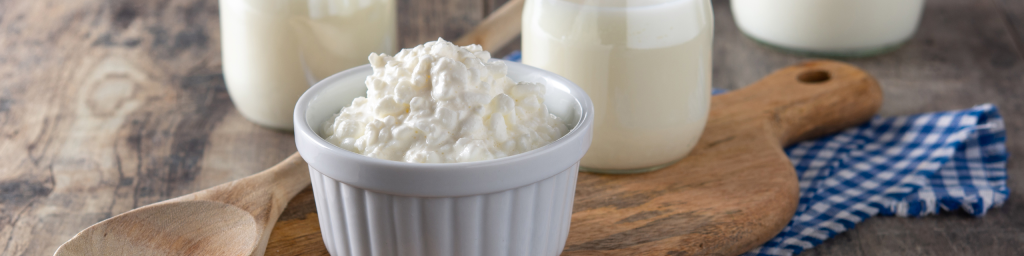
- Fermented dairy – natural yogurt, kefir, buttermilk, sour milk
Just keep in mind that not all bacteria in fermented foods meet the scientific criteria for probiotics. But they can still help balance your microbiota — especially with regular intake.
Prebiotic Foods:
✅ Classic sources of prebiotics: onion, garlic, leek, chicory, Jerusalem artichoke, asparagus, artichokes
✅ Fruits rich in fiber: unripe bananas, apples with skin
✅ Fruits containing polyphenols that support the microbiota: berries, pomegranate
✅ Fiber-rich foods that support gut health: oats, flaxseeds
✅ Foods with prebiotic potential: honey, unsweetened cocoa
Synbiotics — When to Consider a Supplement?
Some natural foods can act as synbiotics, even though they’re not always formulated as precisely as supplements. For example:
- Natural kefir + oats (beta-glucans)
- Yogurt with added flaxseeds
- Fermented vegetables (e.g. sauerkraut) + onion or leek (fructans)
- Sour milk + unripe banana (resistant starch)
In these combinations, probiotic bacteria from fermented foods are provided with substrates for growth — in other words, prebiotics.
In cases of insulin resistance, type 2 diabetes, or frequent digestive issues, a well-chosen synbiotic supplement can help manage symptoms and support recovery. However, it’s worth consulting a dietitian first to select a product tailored to your needs.
And What About Blood Sugar and Metabolism?
The state of your gut microbiota plays a big role in blood sugar regulation. Increasing evidence shows that probiotics and synbiotics can:
- improve insulin sensitivity,
- reduce inflammation,
- support healthier glucose metabolism.
Some probiotic strains, like Lactobacillus casei and Bifidobacterium breve, have been shown to lower HbA1c levels in people with type 2 diabetes. Meanwhile, prebiotics feed gut bacteria that produce short-chain fatty acids (SCFAs) — compounds with anti-inflammatory effects that help maintain glucose homeostasis and protect gut barrier function.
How to Include These Foods in Your Diet?
You don’t need a revolution — small steps make a difference too. A few spoonfuls of fermented veggies with breakfast, a glass of kefir during the day, or some yogurt with dinner can really improve your gut health.
Your gut supports you every day — now it’s time to return the favor. Fermented foods, prebiotic-rich vegetables, and a little awareness are all you need to start moving toward better digestion, stronger immunity, and greater metabolic balance.
Not sure where to start? Book a consultation — I’ll help you find solutions that fit your lifestyle and health needs.
Sources:
1. Sanders ME et al. (2015)
Probiotics and prebiotics in intestinal health and disease: from biology to the clinic.
https://www.ncbi.nlm.nih.gov/pmc/articles/PMC4648921/2. Choi J et al. (2023)
Effects of fermented foods and probiotics on the gut microbiome in metabolic disorders: a systematic review.
https://www.ncbi.nlm.nih.gov/pmc/articles/PMC10213265/3. Gibson GR et al. (2020)
Expert consensus document: The International Scientific Association for Probiotics and Prebiotics (ISAPP) consensus statement on the definition and scope of prebiotics.
https://www.nature.com/articles/s41575-020-00390-54. Chen YT et al. (2022)
Effects of dairy fermented products on gut microbiota and metabolic health: A systematic review and meta-analysis.
https://pubmed.ncbi.nlm.nih.gov/35616160